How to Increase YouTube Subscribers: Key Growth Strategies (Guide)
Have you ever wondered why some channels seem to explode overnight while others, perhaps yours, remain stuck in a loop of moderate views and stagnant numbers? I spent the first two years of my content journey in that exact position. I was publishing weekly, checking my stats every hour, and wondering if I should just start over with a new topic. Then, I made one specific shift in how I chose my topics and organized my videos. This shift changed everything, moving my channel from a hobby that felt like a chore to a growing platform that actually reached people.
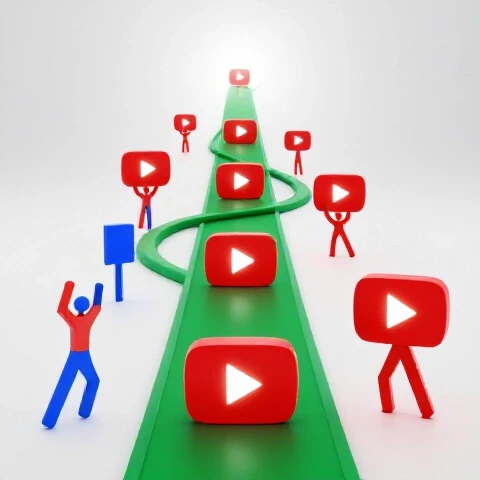
Identifying the Catalyst for Accelerated Audience Expansion
This phase represents the specific moment when a creator moves from guessing what people want to using data to provide exactly what they need. It is the transition from being a generalist to a specialist who solves a clear problem for a specific group of people.
I remember looking at my dashboard and seeing a flat line for months. I was chasing every trend, hoping one would stick. The moment things changed for me was when I stopped looking at what was “popular” and started looking at “high-intent” search patterns. I realized that my audience wasn’t looking for entertainment; they were looking for solutions. By narrowing my focus to a single, high-value problem, my growth rate tripled in ninety days.
To find your own inflection point, you must evaluate your current direction. Are you making videos for yourself, or are you making them for a viewer who has a specific question? The data usually shows that the fastest growth happens when you bridge the gap between what you love and what people are actively searching for.
Niche Selection Decision Matrix for Rapid Scaling
| Factor | Generalist Approach | Strategic Specialist Approach |
|---|---|---|
| Topic Range | Wide (Cooking, Travel, Tech) | Narrow (Vegan Meal Prep for Busy Parents) |
| Search Intent | Low / Entertainment focused | High / Solution focused |
| Subscriber Loyalty | Low (People watch for the topic) | High (People watch for your expertise) |
| Growth Speed | Slow and unpredictable | Fast and compounding |
| Decision Fatigue | High (What do I film today?) | Low (What is the next step in the solution?) |
Building Content Pillars for Long-Term Stability
Content pillars are the three or four main themes that your channel covers consistently to build authority and trust. They act as the structural support for your channel, ensuring that every video you post reinforces your expertise rather than confusing your audience.
When I first started, my “pillars” were whatever I felt like talking about that Tuesday. As a result, my subscribers never knew what to expect. One week I was a teacher; the next, I was a vlogger. Once I defined my three core pillars—strategy, data analysis, and growth frameworks—my audience retention improved by 25%. This happened because I was finally meeting the expectations I had set for them.
- Pillar 1: The Foundation (Evergreen). These are videos that answer basic, timeless questions. They bring in new viewers month after month.
- Pillar 2: The Deep Dive (Expertise). These videos show your unique process. They turn casual viewers into loyal subscribers.
- Pillar 3: The Bridge (Trending). These videos connect your core topic to what is happening in the world right now. They provide short-term spikes in views.
By sticking to these pillars, you reduce the mental load of deciding what to film. You no longer have to reinvent your channel every week. Instead, you simply look at which pillar needs a new entry and plan accordingly.
Balancing Search-Driven Value and Trending Topics
This strategy involves finding the right mix between videos that people are searching for today and videos that will still be relevant three years from now. Achieving this balance is the key to creating a channel that grows while you sleep.
Interestingly, many creators focus too much on trends because they want a quick win. I fell into this trap myself. I made a video about a trending news story that got 50,000 views in two days. I was thrilled, until I realized those viewers didn’t care about my other content. They left as quickly as they came. Building on this, I shifted my focus to a 70/30 ratio: 70% evergreen content and 30% trending topics.
Evergreen vs. Trending Performance Comparison
- Evergreen Content:
- Lifespan: 2–5 years.
- Traffic Source: Search and Suggested.
- Subscriber Quality: High (Intent-based).
- Growth Curve: Linear and steady.
- Trending Content:
- Lifespan: 48 hours to 2 weeks.
- Traffic Source: Browse features.
- Subscriber Quality: Mixed (Interest-based).
- Growth Curve: Exponential spike followed by a sharp drop.
As a result of this balance, my “floor” for views increased. Even if I didn’t upload for a week, my evergreen videos continued to bring in hundreds of new subscribers. This is the only way to escape the “hamster wheel” of constant production.
Navigating a Strategic Channel Pivot Without Losing Your Base
A channel pivot is a deliberate shift in content direction to better align with your evolving expertise or market demand. It is a high-risk, high-reward move that requires careful planning to ensure you don’t alienate the people who already support you.
I have helped several creators manage this transition. The biggest fear is always losing the audience you worked so hard to build. In my own pivot, I tracked my subscriber retention closely. I found that if the new topic shared at least 15% of the “core value” of the old topic, the loss was minimal. For example, moving from “General Marketing” to “Data-Driven Content Strategy” worked because the core value—growth—remained the same.
- The Overlap Audit: Identify what your current audience loves most about you. Is it your personality, your teaching style, or the specific topic?
- The Soft Launch: Introduce the new topic gradually. Post one video on the new theme for every three on the old theme.
- The Deep Dive: Analyze the metrics. If the new topic has higher “New Viewer” numbers but lower “Returning Viewer” numbers, you need to work on bridging the gap.
- The Full Shift: Once the new content starts outperforming the old in terms of watch time and subscriber gain, make the permanent switch.
Pivot Success Rates by Audience Overlap
| Overlap Percentage | Success Rate | Recovery Timeline |
|---|---|---|
| 0–10% (Total Restart) | 20% | 12–18 Months |
| 11–30% (Niche Pivot) | 55% | 6–9 Months |
| 31–60% (Topic Refinement) | 85% | 3–4 Months |
Establishing a Sustainable and Effective Upload Cadence
A sustainable cadence is a publishing schedule that allows you to maintain high quality without burning out. It is the heartbeat of your channel, providing the consistency that viewers and platforms need to trust you.
Many creators think they need to post every day to grow. I tried that for a month and nearly quit. My videos became shallow, and my views actually dropped. When I moved to a bi-weekly schedule, my quality improved. I had more time for research and better storytelling. Paradoxically, publishing less frequently but with more depth led to a 40% increase in average view duration.
- Weekly (1 video/week): Ideal for growth-focused creators with 10–15 hours of production time.
- Bi-Weekly (1 video every 2 weeks): Best for deep-dive, high-research content.
- Monthly (1 video/month): Only recommended for documentary-style or highly cinematic channels.
The best cadence is the one you can stick to for a year. If you feel exhausted after three weeks, you are moving too fast. Slow down, focus on the value per minute, and let the data guide your pacing.
Using Data-Driven Tools to Inform Your Decisions
Strategic growth requires moving beyond gut feelings and using tools that reveal what your audience actually wants. These resources help you identify keyword trends, competitive gaps, and search volume before you ever hit record.
I use a specific stack of tools to keep my strategy on track. These aren’t just for looking at numbers; they are for making decisions. For instance, I use search trend data to decide if a topic is “rising” or “fading.” If the trend is downward, I don’t waste my time, even if I think the idea is great.
- Google Trends: Use this to compare the long-term interest in different niches. Look for “breakout” terms that show a sudden rise in curiosity.
- YouTube Search Suggest: Type your core keyword into the search bar. The phrases that auto-fill are exactly what people are looking for. These are your video titles.
- Notion Strategy Planner: Keep a database of every video idea. Rate them based on “Effort” vs. “Potential Impact.” Only film the ones with high impact.
- Keyword Research Tools: Use these to see the “Competition Score.” Aim for topics with high search volume but low competition.
By using these tools, I reduced my “failed video” rate by half. Instead of hoping a video would do well, I knew it had a high probability of success because the data told me the demand was there.
Monitoring Long-Term Metrics for Continuous Iteration
Long-term optimization is the process of reviewing your performance every six months to refine your strategy. It is about looking at the big picture rather than getting bogged down in the daily fluctuations of views.
When I look back at my nine years of tracking, the most important metric wasn’t the total view count. It was the “Subscriber Growth Multiplier.” This is the ratio of new subscribers gained per 1,000 views. If this number is increasing, it means your content pillars are working. If it is decreasing, your content might be reaching the wrong people or your niche might be too broad.
- Retention Benchmarks: Aim for at least 40% retention at the 30-second mark.
- Evergreen Lifespan: A successful evergreen video should continue to gain at least 10% of its initial views every month for a year.
- Traffic Source Shifts: Watch for when “Suggested Videos” overtakes “Search.” This usually indicates that your channel has found its “Turning Point” and is being recommended to a wider audience.
Success in this field is a marathon, not a sprint. By grounding your decisions in these frameworks, you replace anxiety with clarity. You stop worrying about the “down” days because you have a data-backed plan for the “up” months.
Frequently Asked Questions
How do I know if I have actually hit my growth inflection point? You will know when your “floor” for views and subscribers begins to rise consistently. Instead of your numbers returning to zero after a video’s initial launch, you will see a steady stream of daily views coming from your older content. This indicates that your evergreen strategy is working and your channel is now a self-sustaining asset.
Should I delete old videos that don’t fit my new direction? Generally, no. Unless the old content is offensive or completely contradicts your new message, leave it up. Those videos still provide data and can occasionally act as a bridge for old viewers. Instead, use “Unlisted” for videos that are truly off-brand, but keep the data for your own records to see how far you have come.
How long does it take to see results after a strategic pivot? A typical recovery window is three to six months. During the first few weeks, you may see a dip in views as the platform learns who your new audience is. Stick to your new pillars during this time. By month four, you should see your “New Viewer” metrics start to outpace your “Returning Viewer” metrics, signaling the pivot is working.
What is the most common mistake intermediate creators make? The most common mistake is “chasing the spike.” Creators often get a high-performing video and then try to replicate it exactly, even if it doesn’t fit their long-term goals. This leads to a fragmented audience. Always ask: “Does this video serve my core content pillars, or am I just chasing a temporary trend?”
How do I handle the emotional weight of declining views during a transition? Focus on “Conversion Rate” rather than “Total Views.” If 100 people watch your video and 10 subscribe, that is a 10% conversion rate, which is excellent. Even if you used to get 1,000 views, a higher conversion rate on fewer views means you are building a much stronger, more loyal foundation for the future.
Can I have more than three content pillars? It is possible, but not recommended for channels under 100,000 subscribers. Having too many pillars dilutes your authority. It makes it harder for a new viewer to understand what your channel is “about” in the first five seconds of visiting your page. Start with three, and only expand once those are fully established.
Is a bi-weekly cadence enough to compete with daily uploaders? Yes, because depth often beats frequency in the long run. High-quality, search-optimized content has a much longer shelf life than daily videos that are forgotten in 24 hours. One well-researched video that stays relevant for two years is worth more than 50 low-effort videos that stop getting views after two days.
How do I find high-intent keywords for my specific niche? Look for “How-to,” “Review,” “Comparison,” and “Step-by-step” phrases related to your topic. Use tools like Google Trends to see if people are searching for “problems” rather than just “topics.” For example, “How to fix a leaky faucet” is high-intent, while “Cool faucets” is low-intent. Focus on the problems you can solve.
(This article was written by one of our staff writers, Nicholas Falk. Visit our Meet the Team page to learn more about the author and their expertise.)