How to Build a Lasting Video Production System for YouTube (Guide)
Most successful creators eventually hit a wall where their passion for making videos turns into a grueling management job they never signed up for. You might find yourself working fourteen-hour days, yet your channel’s growth has flattened because you are too busy color-grading or answering emails to think about your next big idea. This exhaustion is not a sign of failure, but rather a signal that your initial way of working was never meant to handle the weight of a growing business.
The Fragility of Initial Content Workflows
Early production models often rely on the creator’s personal stamina rather than a repeatable structure. These workflows are usually built on the fly to solve immediate problems, which makes them highly personalized and difficult for anyone else to follow. As a result, they tend to collapse the moment a creator tries to add a team member or increase their upload frequency.
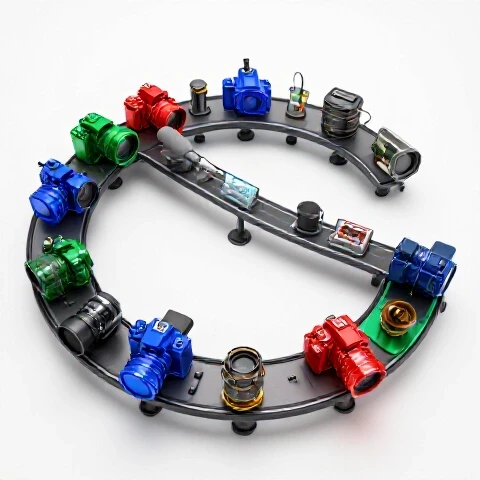
When I first started scaling, I realized that my “system” was just a series of habits stored in my head. I didn’t have a business; I had a very demanding job where I was the only employee. To move from a solo creator to a media business operator, I had to understand why my first attempt at organization failed to hold up under pressure.
- The “Everything-in-my-Head” Trap: Relying on memory instead of written guides.
- Linear Processing: Doing one task at a time instead of running parallel workflows.
- Lack of Redundancy: If the creator gets sick, the entire production stops.
- Feedback Loops: No formal way to review work, leading to inconsistent quality.
Identifying the Breaking Point of Solo-Driven Processes
Determining when an early-stage workflow is no longer functional requires looking at how much time is spent on “maintenance” versus “growth.” If you spend 80% of your week on technical tasks and only 20% on strategy, your current model has reached its limit. This imbalance prevents you from exploring new formats or improving the quality of your storytelling.
In my experience, the breaking point usually happens when you hire your first editor. Suddenly, the informal way you used to organize files or name project folders becomes a major hurdle. Without a structured foundation, the time you save by outsourcing the edit is often lost to the time spent explaining things to your new hire.
Solo vs. Team-Based Production Timelines
| Task Phase | Solo Creator Hours | Team-Based Hours (Creator Role) | Why the First System Fails Here |
|---|---|---|---|
| Research & Scripting | 8 Hours | 4 Hours | Lack of shared research templates. |
| Filming/Recording | 4 Hours | 3 Hours | No set-up checklists for assistants. |
| Post-Production | 15 Hours | 1 Hour (Review Only) | Creative vision isn’t documented. |
| Distribution & SEO | 3 Hours | 0.5 Hours | Manual entry instead of automated logs. |
| Total Time | 30 Hours | 8.5 Hours | Fragile systems can’t delegate. |
Transitioning from Creator to Operator
Becoming an operator means shifting your focus from “doing the work” to “designing the work.” This transition is difficult because it requires letting go of the granular control that helped you succeed in the first place. Many creators struggle here because they view delegation as a loss of quality rather than a gain in capacity.
To build a sustainable media business, you must view your channel as a series of interconnected parts. Each part needs a clear input and a predictable output. When your first production model fails, it is usually because these parts were too tightly wound around your personal daily routine.
- Defining Roles: Moving from “I do everything” to “I am the creative director.”
- Standardizing Inputs: Ensuring your editor always receives the same file types and notes.
- Establishing Milestones: Setting clear deadlines for each stage of the video.
- Separating Strategy from Execution: Blocking time specifically for business growth.
Why Rigid Structures Stifle Creative Growth
Interestingly, the first systems creators build are often too rigid or too loose, with no middle ground. A system that is too rigid doesn’t allow for the spontaneous “magic” that makes a video go viral. Conversely, a system that is too loose leads to missed deadlines and a lack of brand consistency across different videos.
The lesson I learned was that a scalable model should provide a “safety net” of structure, not a cage. It should handle the repetitive, boring tasks so that your creative energy is preserved for the parts of the video that only you can do. When a workflow is too focused on the technical steps, it often ignores the creative soul of the channel.
Creative Control vs. Efficiency Trade-offs
- The Perfectionist’s Dilemma: Spending five hours on a minor detail that the audience won’t notice.
- The Template Trap: Using the same structure so often that the content becomes predictable and boring.
- Communication Gaps: Failing to explain the “why” behind a creative choice to a team member.
- Quality vs. Quantity: Increasing output at the expense of the channel’s unique voice.
The Role of Clear Guidelines in Maintaining Quality
One of the biggest reasons early workflows fail is the lack of written standards. Without these, every new hire is essentially guessing what you want. This leads to a cycle of endless revisions, which is frustrating for both you and your team. Clear guidelines act as a bridge between your creative vision and the team’s technical execution.
I found that the most effective guides are not long manuals, but short, visual checklists. They should answer the most common questions before they are asked. If you find yourself repeating the same instructions to your designer or editor, that is a clear sign that your current system lacks a proper documentation layer.
- Visual Style Guides: Examples of fonts, colors, and pacing that define your brand.
- Technical Checklists: Step-by-step lists for exporting files or uploading metadata.
- Feedback Frameworks: A consistent way to tell a team member what worked and what didn’t.
- Asset Libraries: A central place for music, graphics, and b-roll that everyone can access.
Hiring for Scalability Rather than Immediate Relief
Many creators make the mistake of hiring someone just to “stop the bleeding” of their workload. While this provides short-term relief, it often creates long-term problems if the new person isn’t integrated into a scalable system. Hiring should be a strategic move to build a department, not just a way to dump tasks on someone else.
When my first attempt at building a team faltered, it was because I hired for the person, not the role. I expected my first assistant to be a mind-reader. A better approach is to define the role’s responsibilities first and then find the person who fits those specific needs.
- Identify the Heaviest Lift: Determine which task takes the most time but requires the least of your unique “genius.”
- Create a Trial Project: Give a potential hire a small, paid task to see how they follow your existing (or developing) guides.
- Monitor the Onboarding Time: If it takes you a month to train someone, your system is likely too complex.
- Evaluate for Cultural Fit: Ensure the person understands the long-term vision of the channel, not just the technical requirements.
Lessons in Operational Adaptability
A production system that lasts is one that can change as the platform changes. YouTube and other media landscapes are constantly shifting, and a rigid workflow will eventually become obsolete. The goal is to build a “living” system that evolves based on performance data and team feedback.
I’ve learned that the best systems are built through “instructive failures.” Each time a video is late or a thumbnail underperforms, it is an opportunity to look at the process and see where the communication broke down. This mindset shifts the focus from blaming people to fixing the underlying workflow.
- Regular Process Audits: Reviewing your workflow every three months to see what can be improved.
- Team Feedback Sessions: Asking your editors and assistants where they feel stuck or slowed down.
- Data-Driven Adjustments: Changing your production schedule based on when your audience is most active.
- Scalability Testing: Asking, “If we had to double our output next month, would this system survive?”
Case Study: The Transition from Solo to Team
Consider a creator who reached 200,000 subscribers by doing everything themselves. They were producing one high-quality video per week but were on the verge of burnout. Their first attempt at hiring an editor failed because they didn’t have a way to transfer their “editing style” to someone else. The creator ended up re-editing 50% of every video the freelancer turned in.
By analyzing why that first system didn’t last, the creator realized they needed a more robust way to communicate creative intent. They developed a “Style Bible” and a “Review Checklist.” After putting these in place, the revision time dropped significantly.
- Before: 15 hours of re-editing per video.
- After: 1.5 hours of reviewing and minor notes.
- Result: The creator was able to launch a second channel because they finally had their time back.
Building a Sustainable Media Business Roadmap
Scaling is not a one-time event; it is a continuous process of refinement. The transition from a solopreneur to a business owner requires a change in identity. You must become the architect of your business rather than its primary engine.
Your roadmap should focus on gradually removing yourself from the “doing” of each stage. Start with the most repetitive tasks and work your way up to the more creative ones. Eventually, your role should be focused on high-level strategy, networking, and the “on-camera” performance that defines your brand.
- Phase 1: Stabilization: Document your current messy process so you can see it clearly.
- Phase 2: Delegation: Hire for the most time-consuming task (usually editing).
- Phase 3: Optimization: Refine your guides based on the friction points you find with your team.
- Phase 4: Expansion: Use your saved time to explore new revenue streams or content formats.
Common Pitfalls in Early Scaling Efforts
Understanding why early systems fail often comes down to a few common mistakes. Avoiding these can save you months of frustration and prevent you from giving up on the idea of building a team altogether.
- Over-complicating the Tech: Using too many apps or tools to manage a simple process.
- Neglecting Communication: Assuming your team knows what you want without you telling them.
- Ignoring the Data: Sticking to a production schedule that isn’t producing results.
- Micromanagement: Hiring professionals and then telling them how to do every single click of their mouse.
FAQ: Navigating the Transition to a Scalable Team
Why do I feel like I’m working more after hiring help? This is a common “scaling dip.” In the beginning, you have to spend time training and building guides. If this lasts more than a month, your instructions are likely unclear, or your system is too reliant on your daily input.
How do I know which task to delegate first? Look for the task that is “low-skill, high-time.” For most creators, this is basic video assembly, file management, or research. Save the high-level creative tasks for last.
What if an editor ruins my channel’s “voice”? This fear usually stems from a lack of documented standards. If you define your “voice” through specific examples of pacing, music choice, and humor, an editor can replicate it.
Is it better to hire a general assistant or a specialist? For scaling a media business, specialists (like dedicated editors or designers) usually provide a better return on time saved. General assistants are great for admin, but they may struggle with the technical nuances of video production.
How often should I update my production guides? Treat them as living documents. Whenever a mistake happens, update the guide to prevent that specific mistake from happening again. A quarterly review is also a good habit.
How do I manage a team across different time zones? Focus on “asynchronous communication.” Use project management tools where the status of every task is visible at a glance, so you don’t need to be online at the same time as your team.
What is the most important metric to track when scaling? Track your “Creator Hours per Video.” Your goal is to see this number go down over time while your output stays the same or increases.
Can I scale without losing the personal connection with my audience? Yes. By delegating the technical work, you actually have more time to engage with your community and focus on the personal storytelling that builds that connection.
What should I do if my first hire doesn’t work out? Don’t abandon the system. Analyze whether the failure was due to the person’s skills or a lack of clarity in your workflow. Often, a “bad hire” is actually a symptom of a “bad system.”
How do I stop micromanaging my team? Trust the guides you’ve built. If you have clear standards and a good review process, you don’t need to watch them work. Focus on the final output rather than the individual steps they took to get there.
What is the “One-Video Rule” in scaling? The goal of a scalable system is that the creator should be able to step away for the duration of one full video cycle without the production grinding to a halt.
How do I handle the creative “hand-off”? Use “Creative Briefs.” These are short documents for each video that outline the goal, the tone, and any specific “must-haves.” This ensures the team is aligned before they start working.
(This article was written by one of our staff writers, Christopher Lang. Visit our Meet the Team page to learn more about the author and their expertise.)