How to Make YouTube Uploads More Sustainable (Case Study)
For years, I believed that the only way to succeed as a creator was to outwork everyone else. I spent my nights staring at a blue screen while my family slept, fueled by coffee and the fear of a stagnant channel. My health began to decline, my stress levels were through the roof, and I was missing out on the small, precious moments with my children. Eventually, I realized that if I didn’t change how I worked, I wouldn’t have a career left to protect.
The shift toward a more balanced production cycle changed everything for me. My sleep improved, my resting heart rate dropped, and I found I could actually enjoy dinner with my family without checking my phone every five minutes. This transformation wasn’t about working less; it was about working with a repeatable system that respected my human limits. By refining my process, I moved from a state of constant exhaustion to a rhythm that I can maintain for the next decade.
Auditing the Impact of High-Stress Production Cycles
This process involves identifying the specific tasks and habits that lead to physical and mental exhaustion during the video creation process. By looking at where your time and energy go, you can find the “leaks” in your current workflow.
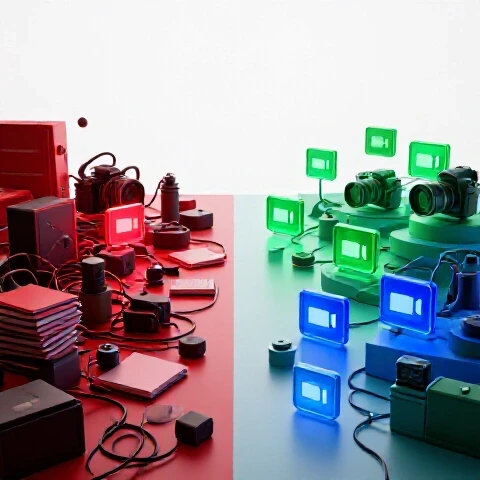
When I first started tracking my output, I noticed a pattern. I would spend twenty hours on a single video in a frantic three-day burst, then feel too tired to film anything for the next two weeks. This “heroic effort” style of working is the fastest path to burnout. It creates a cycle of guilt where you feel bad for working too much, and then feel bad for not working at all.
Interestingly, my data showed that my best work didn’t come from these late-night sessions. In fact, editing after 10:00 PM took me twice as long because my brain was foggy. I had to learn to recognize the warning signs of overwork before they became a full-blown crisis. These signs included irritability with my kids, a lack of interest in new ideas, and a physical heaviness that sleep couldn’t fix.
| Metric | Unsustainable Production Habits | Sustainable Workflow Habits |
|---|---|---|
| Work Hours | 11 PM – 3 AM (late nights) | 5 AM – 7 AM or 7 PM – 9 PM |
| Planning | Scripting while filming | Pre-scripting in batches |
| Family Time | Distracted, checking comments | Phone-free hours, hard stops |
| Energy Level | High peaks followed by crashes | Steady, manageable focus |
| Consistency | Random uploads, feast or famine | Predictable weekly or bi-weekly |
Building on this audit, I realized that my “all or nothing” approach was the primary cause of my stress. I needed a system that allowed for real life to happen—like a child getting sick or a busy week at my day job—without my channel falling apart.
Designing a Repeatable Video Pipeline
A repeatable video pipeline is a structured set of steps that takes a video from an initial idea to a finished upload with minimal friction. This system removes the need to “figure it out” every time you sit down to work.
One of the biggest hurdles for creators is decision fatigue. When you sit down to work and have to decide what to film, how to frame it, and what to say, you waste your best creative energy on logistics. I solved this by creating a “production manual” for myself. This document outlines every step of my process, from keyword research to the final export settings.
By following a standardized checklist, I reduced my total production time by nearly 30 percent. I no longer had to wonder if I had captured enough b-roll or if I had recorded the audio correctly. Everything was part of a repeatable routine. This structure didn’t kill my creativity; it actually freed my mind to focus on the content because the “how” was already handled.
- Step 1: Idea Capture. Use a simple app to store ideas so you never start with a blank page.
- Step 2: Template Scripting. Use a recurring structure for your scripts to speed up the writing process.
- Step 3: Equipment Presets. Keep your lights and camera settings ready to go so you can film in minutes, not hours.
- Step 4: Editing Presets. Use color grades and audio chains that you can apply with one click.
As a result of these efficiencies, I was able to move from spending fifteen hours per video down to just nine. Those six hours saved each week went directly back into my family life and my own mental recovery.
Implementing Energy-Based Scheduling
Energy-based scheduling is the practice of matching your most difficult tasks to the times of day when you have the most mental clarity. It moves away from the idea that all hours are created equal.
As a creator juggling a family and a career, I had to accept that I couldn’t always work when I wanted to. However, I could control what I worked on. I discovered that my creative energy is highest in the early morning. If I tried to write a script at 9:00 PM after a long day of work and parenting, it would take me three hours. If I did it at 6:00 AM, it took forty-five minutes.
I began to categorize my tasks into “High Energy” and “Low Energy” buckets. High Energy tasks include scripting, filming, and complex editing. Low Energy tasks include thumbnail design, replying to comments, and organizing files. By doing the hard work when I was fresh, I stopped feeling like I was constantly pushing a boulder uphill.
- Morning (High Energy): Writing and filming.
- Afternoon (Medium Energy): Rough cut editing.
- Evening (Low Energy): Admin tasks, keyword research, and planning.
This approach significantly reduced my mental load. I stopped feeling guilty about not being “productive” in the evenings because I knew I had already handled the heavy lifting during my peak hours. It allowed me to be fully present with my partner and children because the “work brain” could finally switch off.
The Power of Batching and Asset Management
Batching is the process of doing similar tasks at the same time to take advantage of mental momentum. Asset management involves organizing your digital files so they are easy to find and reuse.
When I transitioned to a more balanced workflow, batching became my secret weapon. Instead of setting up my lights and camera every time I wanted to film, I started filming three videos in one session. This saved me nearly two hours of setup and teardown time per month. I applied the same logic to scripting; I would spend one Saturday morning writing four scripts in a row.
Interestingly, I found that my “on-camera” presence improved when I batched. I was already in the flow, so the second and third videos often felt more natural than the first. To make this work, I had to become very disciplined with my file organization. I created a library of “reusable assets,” such as music tracks, graphics, and B-roll clips, which I could pull into any project.
- Script Batching: Write 2-4 outlines in one sitting.
- Filming Batching: Record all A-roll for multiple videos in one afternoon.
- Thumbnail Batching: Create the visual concepts for a month’s worth of content at once.
- Admin Batching: Spend 30 minutes a week responding to all channel comments.
This shift meant that even if I had a week where life got in the way, I already had content “in the bank.” This buffer is the best defense against creator burnout. It removes the “emergency” feeling of having to produce something at the last minute.
Setting Boundaries to Protect Family and Mental Health
Boundary setting is the act of creating “no-work zones” in both your physical space and your daily schedule. It is essential for maintaining long-term interest in content creation.
For a long time, my office was my bedroom, and my phone was always in my hand. This meant I was never truly “off.” My brain was constantly scanning for video ideas or checking analytics. To fix this, I had to set hard boundaries. I established a rule: no work talk or checking stats after 6:00 PM. I also started leaving my phone in a different room during dinner.
At first, I felt a lot of anxiety. I thought that if I didn’t respond to a comment immediately, my channel would fail. But I quickly learned that the world didn’t end. In fact, my community appreciated it when I showed up refreshed and energized rather than tired and reactive. Setting boundaries is an act of respect for yourself and your loved ones.
- Physical Boundaries: If possible, work in a dedicated space that you can leave at the end of the day.
- Digital Boundaries: Use “Do Not Disturb” modes and remove work apps from your home screen.
- Time Boundaries: Set a “stop time” every day and stick to it, regardless of where you are in a project.
- Emotional Boundaries: Remind yourself that your value as a person is not tied to your view count.
By protecting my personal life, I found that I actually had more to talk about in my videos. I was living a real life again, which made my content more grounded and relatable. My family noticed the difference, too. My kids stopped seeing me as the person always behind a laptop and started seeing me as a present father.
Tracking Sustainability Metrics for Long-Term Success
Sustainability metrics are data points that measure your well-being and the efficiency of your work, rather than just the growth of your channel. These metrics help you stay on track with your health goals.
In the creator world, we are obsessed with views and subscribers. While those matter, they don’t tell the whole story. I started tracking “Time-to-Publish” and “Energy Level Post-Edit.” If a video took twenty hours to make but left me feeling miserable for three days, it wasn’t a win, no matter how many views it got. I wanted to find the “sweet spot” where I could produce high-quality content without sacrificing my health.
I used a simple spreadsheet to track my hours worked versus my perceived stress levels. Over six months, I saw a clear trend: as my systems became more efficient, my stress levels dropped, even as my output remained consistent. This data gave me the confidence to keep saying “no” to the hustle culture that tells us we must always be doing more.
| Month | Production Hours | Stress Level (1-10) | Family Dinners Missed | Output Consistency |
|---|---|---|---|---|
| Month 1 | 65 | 9 | 12 | 100% |
| Month 3 | 45 | 5 | 4 | 100% |
| Month 6 | 35 | 2 | 0 | 100% |
This table shows that it is possible to maintain the same level of output while significantly reducing the “cost” to your life. The goal is to make the creation process as invisible as possible so that your life can be the main focus.
Tools and Systems for a Balanced Workflow
Using the right tools can automate the boring parts of creation, allowing you to spend more time on the parts you love. These resources should simplify your life, not add more complexity.
I am a big believer in “simple over fancy.” You don’t need a hundred different apps to stay organized. You need a few reliable tools that help you execute your repeatable pipeline. For me, this includes a basic project management tool, a calendar, and a few AI-assisted tools for transcription and basic editing.
- Notion or Trello: Use these to track where each video is in your pipeline. When the system is easy to use, you are much more likely to stick to it. This consistency is what leads to long-term success without the constant threat of burnout.
Creating a Personalized Sustainability Roadmap
A sustainability roadmap is a long-term plan that outlines how you will evolve your creation process as your life changes. It ensures that your channel grows with you, not at the expense of you.
Your roadmap should be flexible. What works for you today might not work two years from now when your kids are older or your job responsibilities change. The key is to check in with yourself regularly. Every three months, I sit down and ask: “Is this schedule still serving me? Am I feeling energized or drained?”
If I feel the burnout creeping back in, I know it’s time to simplify my format or perhaps reduce my upload frequency for a month. There is no shame in slowing down to ensure you don’t stop entirely. A balanced creator is one who understands that this is a marathon, not a sprint.
- Phase 1: Stabilization. Focus on reducing immediate stress and setting basic boundaries.
- Phase 2: Optimization. Refine your pipeline and start batching tasks to save time.
- Phase 3: Maintenance. Monitor your energy levels and adjust your workflow as life evolves.
By following this roadmap, I have managed to stay in the game for over twelve years. I have seen many creators come and go, burning bright for a year and then disappearing because they couldn’t sustain the pace. My goal has always been to be the person who is still creating, still healthy, and still happy a decade from now.
Frequently Asked Questions
How do I start batching if I only have two hours of free time a week? Start small by batching your “prep” work. Spend your two hours this week just writing four video outlines. Next week, use your time to film just the A-roll for two of them. You don’t have to batch everything at once; even grouping small tasks like thumbnail research can save you 15 minutes of “switching cost” time.
What if my family doesn’t understand my need for dedicated work time? Communication is key. Sit down with your partner and explain that by having two hours of “uninterrupted” time, you can finish your work faster and be fully present with them afterward. When they see that your new schedule leads to more quality time for the family, they are usually much more supportive of those boundaries.
I feel guilty when I’m not working on my channel. How do I stop this? Remind yourself that rest is a productive activity. A tired creator produces mediocre content. By stepping away, you are giving your brain the space it needs to generate better ideas. Think of it as “sharpening the saw”—you can’t cut wood effectively if you never stop to maintain your tools.
Is it okay to reduce my upload frequency to stay sane? Absolutely. It is much better to upload once every two weeks for three years than to upload twice a week for three months and then quit forever. Your audience will stay with you as long as the quality remains high and you are honest with them about your schedule.
How do I handle the “emergency” of a video failing or a technical glitch? This is why having a “buffer” is so important. If you have a video scheduled two days in advance, a technical glitch is just a minor annoyance. If you are trying to upload an hour before the deadline, it’s a crisis. Build a one-week buffer into your schedule to turn emergencies into simple tasks.
What is the first sign that my workflow is becoming unsustainable? The first sign is usually “dread.” If you wake up and the thought of filming or editing makes you feel heavy or anxious, your system is likely putting too much pressure on you. Pay attention to that feeling early before it turns into physical exhaustion or resentment toward your audience.
Can AI tools really help me save time without losing my “voice”? Yes, if you use them for the “manual labor” parts of creation. Use AI to generate transcripts, suggest titles based on your script, or clean up background noise. These tasks don’t require your creative soul, but they take up a lot of time. Outsourcing the “boring” stuff to technology lets you focus on the storytelling.
How do I manage my energy if I have a high-stress day job? If your day job is mentally draining, don’t try to do “High Energy” creator tasks immediately after work. Instead, use your morning for 30 minutes of creative work, or save your filming for a weekend morning when you are fresh. Use your post-work evenings for Low Energy tasks like organizing files or browsing for inspiration.
What should I do if I’ve already hit a wall and feel completely burnt out? Take a mandatory break. Tell your audience you are taking two weeks off to refine your systems. During that time, don’t touch your editing software. Use the break to set up the repeatable pipeline discussed here. You cannot fix a broken system while you are still struggling to keep up with it.
How do I track my energy levels without it feeling like more work? Keep it very simple. At the end of each work session, give yourself a “battery score” from 1 to 5 in your phone’s notes app. After two weeks, look for patterns. You’ll quickly see which tasks drain you the most and which times of day are your most productive.
(This article was written by one of our staff writers, Benjamin Cole. Visit our Meet the Team page to learn more about the author and their expertise.)