Balancing Creativity and Operations in YouTube Business (Case Study)
After eleven years in the creator economy, I managed to scale my production from a frantic one-man show to a streamlined media business that reduced my personal workload by over 70% while doubling our monthly output. This transition was not about working harder; it was about shifting my identity from a person who “makes videos” to a person who “builds systems that make videos.” For most successful solopreneurs, the ceiling isn’t talent or ideas—it is the lack of a bridge between their creative spark and the operational machinery required to sustain it.
The Evolution from Solo Creator to Media Business Operator
Transitioning from a creator to an operator involves moving from a state where you are the primary engine of production to a state where you are the architect of a system. It requires decoupling your personal time from the final output, ensuring that the brand can function and grow even when you are not actively touching every file.
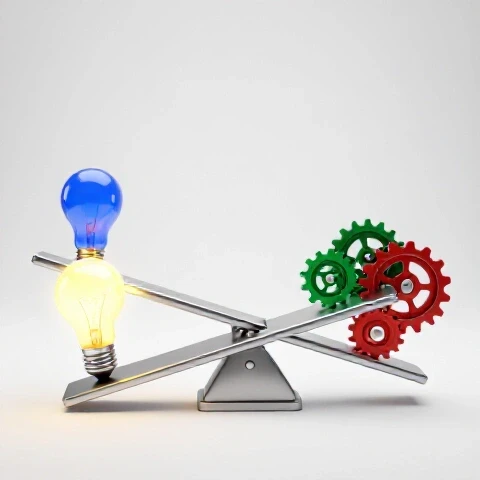
When I first started, I believed that my “creative touch” was the only thing keeping the channel alive. I spent sixty hours a week editing, designing thumbnails, and managing uploads. I was successful, but I was also a bottleneck. The moment I stepped away, the business stopped. To scale, I had to learn that operations are not the enemy of creativity; they are the container that allows creativity to flourish without causing burnout. By documenting my “creative gut feelings” into logical steps, I created a scalable video creation model that thrived on consistency rather than just caffeine and late nights.
- The Solo Trap: You spend 80% of your time on low-level execution and 20% on strategy.
- The Operator Model: You spend 20% of your time on high-level creative direction and 80% of the business runs on automated or delegated workflows.
- The Result: Predictable growth, higher production value, and the mental space to innovate.
Designing Workflows that Anchor Artistic Vision
A workflow is a documented series of steps that takes a project from a raw idea to a finished product. In a media business, this workflow must protect the artistic integrity of the content while removing the need for the founder to micromanage every frame or pixel.
In my experience, the biggest fear for creators is that their “voice” will be lost once they stop doing the work themselves. I solved this by breaking down my creative process into “The Creative Core” and “The Operational Shell.” The core is the ideation and the on-camera performance—the things only I can do. The shell is the editing, the color grading, the metadata, and the distribution. By isolating these, I could build a YouTube business scaling strategy that focused my energy only where it added the most unique value.
Solo vs. Systematized Production Timelines
| Phase | Solo Creator Hours | Systematized Team Hours | Founder Input (Post-Scaling) |
|---|---|---|---|
| Research & Scripting | 10 Hours | 6 Hours | 2 Hours (Review/Direct) |
| Filming / Recording | 5 Hours | 4 Hours | 4 Hours (Performance) |
| Video Editing | 25 Hours | 30 Hours | 1 Hour (Final Approval) |
| Thumbnail & Design | 5 Hours | 6 Hours | 15 Mins (Choice) |
| Admin & Upload | 5 Hours | 3 Hours | 0 Hours |
| Total | 50 Hours | 49 Hours | 7.25 Hours |
Standard Operating Procedures for Creative Consistency
Standard Operating Procedures (SOPs) are the instruction manuals for your business that define how tasks should be performed to achieve a consistent result. They translate your subjective preferences into objective requirements that a team member can follow with high precision.
I used to think my editing style was “magic,” but it was actually just a series of repeatable choices. To delegate YouTube editing, I had to define what “a good cut” looked like. I created a “Style Bible” that documented everything from my preferred font sizes and hex codes to the specific pacing of my intros. This SOP-driven approach meant that my first editor didn’t have to guess what I liked; they just had to follow the blueprint I had already validated through years of solo work.
- Visual SOPs: Use Loom or Zoom to record your screen while you work. Explain why you are making certain choices.
- The “If/Then” Framework: Create rules for common scenarios (e.g., “If the speaker pauses for more than 1.5 seconds, then apply a jump cut or a b-roll overlay”).
- Feedback Loops: Instead of fixing a mistake yourself, record a video explaining the mistake and have the team member fix it. This builds the system’s intelligence over time.
The Decision Matrix for Task Delegation
A delegation matrix is a tool used to determine which tasks should stay with the creator and which should be handed off to a system or a specialist. It ranks tasks based on their complexity and their impact on the brand’s unique identity.
When I analyzed my workload, I realized I was spending ten hours a week on administrative tasks that required zero creative input. By using a delegation matrix, I could see that “answering sponsor emails” was a high-impact but low-creativity task. It was the perfect candidate for a Virtual Assistant. Conversely, “final script polish” was high-impact and high-creativity, meaning I should keep it until my systems were much more mature.
Delegation Decision Matrix
- Low Creativity / Low Impact: (e.g., File organization, transcript cleaning) – Automate or Delegate Immediately.
- Low Creativity / High Impact: (e.g., Email management, calendar scheduling, basic SEO) – Delegate to a VA with a clear SOP.
- High Creativity / Low Impact: (e.g., Experimental b-roll, niche social media posts) – Delegate to a specialist with creative freedom.
- High Creativity / High Impact: (e.g., Core storytelling, brand strategy, on-camera presence) – Retain by the Founder.
Integrating Quality Control into the Production Cycle
Quality Control (QC) is the process of verifying that the final output meets the brand’s standards before it is published. It acts as the safety net that allows a creator to step back from the daily grind without worrying about a drop in quality.
In my transition from solopreneur to media business, I implemented a three-stage QC process. First, the editor performs a self-check against a checklist. Second, a lead editor or project manager reviews the technical aspects (audio levels, export settings). Finally, I perform a “Creative Pass” where I only look for tone and storytelling. This reduced my review time from three hours per video to just twenty minutes, ensuring that transitioning from solopreneur to media business didn’t result in a “watered-down” product.
- Technical Checklist: No dead frames, audio normalized to -3db, subtitles are 100% accurate.
- Brand Checklist: Correct logo usage, brand colors are consistent, call-to-actions are included.
- The “Vibe” Check: Does the video feel like the channel? Is the energy high in the first 30 seconds?
Financial Realities and the ROI of Operational Systems
Financial tracking in a team-based environment involves measuring the cost of production against the revenue generated to ensure the business remains profitable as it scales. It moves the focus from “how much I made” to “what is the profit margin per video.”
When I was solo, my “cost” was just my time. Once I built a team, I had to track the “Cost Per Video” (CPV). Interestingly, while my expenses went up, my ability to take on higher-paying sponsorships and launch digital products also increased because I had the bandwidth to manage them. My data showed that for every $1,000 I spent on operational support, I was able to generate $3,500 in new revenue through improved consistency and strategic partnerships.
Cost vs. Output Scaling Curves
- Phase 1 (Solo): $0 Spend | 1 Video/Week | Founder Capacity: 100% Full.
- Phase 2 (Partial Delegation): $1,200/mo Spend | 1.5 Videos/Week | Founder Capacity: 60% Full.
- Phase 3 (Full Systematization): $4,000/mo Spend | 3 Videos/Week | Founder Capacity: 20% Full.
Tools for Managing a Distributed Creative Team
Building a team-optimized video marketing workflow requires a central “source of truth” where all tasks, assets, and communications live. Without these tools, the operational side of the business becomes a chaotic mess of Slack messages and lost Google Drive links.
- Notion or ClickUp: I use these for project management. Every video is a “card” that moves through stages: Idea -> Scripting -> Filming -> Editing -> QC -> Scheduled.
- Frame.io: This is essential for video review. It allows me to leave time-stamped comments directly on the video file, which saves hours of back-and-forth emails with editors.
- Slack: For quick daily syncs and “watercooler” talk to keep the team culture alive.
- Google Workspace: For centralized file storage and collaborative scriptwriting.
- LastPass or Dashlane: To securely share login credentials for the channel and various tools without giving away master passwords.
Common Pitfalls in the Transition to Operations
The road to a scalable media business is paved with common mistakes that can derail a creator’s progress. One of the most frequent is “The Perfectionism Trap,” where the creator takes back the work because the team member did it 90% as well as they would have.
In my 11-year journey, I learned that 90% “done by someone else” is often better for the business than 100% “done by me” if it means I can produce three times as much content. Another pitfall is failing to update SOPs. A system is a living organism; if you change your style but don’t change the manual, your team will continue to produce outdated work, leading to frustration on both sides.
- Micromanagement: If you hire experts, let them be experts. Provide the “what” and the “why,” but let them handle the “how.”
- Under-Communication: Assumptions are the death of operations. If a step isn’t written down, it doesn’t exist.
- Ignoring the Data: If a certain type of video takes twice as long to produce but gets half the views, your operational system should flag that as a low-ROI activity.
A Roadmap for Building Your Media Business
Scaling is a marathon, not a sprint. It starts with a self-audit of your time and ends with a fully functioning production house that operates with minimal founder intervention.
First, track your time for two weeks. Identify every task that doesn’t require your specific face or voice. Second, pick the one task that drains your energy the most and create an SOP for it. Third, delegate that task and use the saved time to work on a new revenue stream or a high-level strategy. Repeat this process until your only job is to show up, be creative, and steer the ship.
- Months 1–3: Document every process. Create your first Style Bible.
- Months 4–6: Delegate the most time-consuming technical tasks (editing/design).
- Months 7–12: Bring on administrative support and refine your QC systems.
- Months 13+: Focus on multi-channel growth and brand expansion.
FAQ: Navigating the Balance of Creativity and Systems
How do I know if I am ready to start building a team? You are ready when your growth has plateaued because you literally do not have more hours in the day to produce content. If you are turning down brand deals or skipping upload days because you are overwhelmed, it is time to shift from solo creator to operator.
Will my audience notice if I stop editing my own videos? If you have built strong SOPs for content creators, your audience should only notice an increase in quality and consistency. Most viewers care about the value and the personality, not who physically moved the clips on the timeline.
What is the first role I should look to fill? Generally, you should delegate the task that takes the most time but offers the least creative fulfillment. For 90% of YouTube creators, this is video editing. For others, it might be research or administrative management.
How much should I expect my production costs to rise? When transitioning to a team-based model, expect your costs to increase by 20% to 40% of your current revenue. However, the goal is that this investment allows you to increase your output and revenue by a much larger margin.
How do I keep my “voice” consistent across a team? Create a “Brand Voice” document that lists your common catchphrases, your stance on controversial topics, and the “vibe” of your storytelling. Review the first five projects from any new team member very closely to calibrate their understanding of this voice.
What if a team member leaves? Does the system break? This is why SOPs are vital. If your business is built on a system rather than an individual’s “magic,” you can bring in a new person and have them up to speed quickly by following the documented workflows.
How do I manage the fear of losing control? Start small. Delegate a minor task, like thumbnail variations or social media clips. As you see the system working and the quality remaining high, your confidence in the operational model will grow, making it easier to delegate larger pieces of the business.
How do I track the ROI of my team? Monitor your “Time Saved vs. Revenue Growth.” If you save 20 hours a week and use that time to secure one extra brand deal per month, the team has already paid for itself. Use a simple spreadsheet to track monthly production costs against total channel income.
Do I need a project manager right away? No. In the beginning, you are the project manager. You should only hire a dedicated manager once you have at least 3–4 people reporting to you and the administrative overhead of managing them starts to eat into your creative time again.
Can I still be “creative” if I am following a system? Absolutely. Systems handle the boring, repetitive parts of creativity so you can focus on the big ideas. Think of it like a musician: the “system” is the instrument and the sheet music, but the “creativity” is the performance and the soul they bring to the notes.
(This article was written by one of our staff writers, Christopher Lang. Visit our Meet the Team page to learn more about the author and their expertise.)