How to Decide Which Video Tasks to Keep In-House (Step-by-Step)
Bringing up layering in the context of a growing media business is often misunderstood as simply adding more people to a project. In my eleven years of navigating the transition from a solo creator to a business operator, I have discovered that layering is actually about the strategic placement of your own energy. When you first start out, you wear every hat because you have to, but as the business grows, you realize that not every hat fits your head the same way. The challenge isn’t just about finding people to help; it is about knowing which parts of the process are the “soul” of your work and which parts are merely the “machinery.”
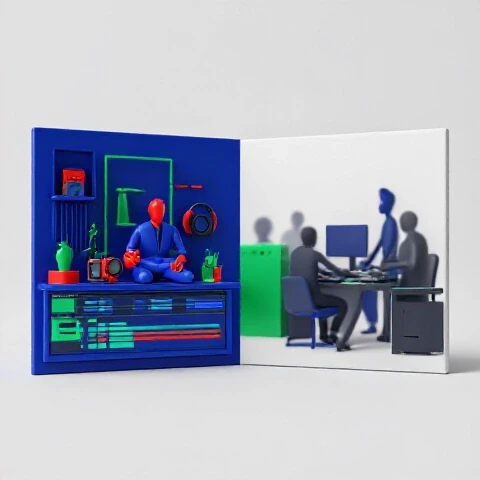
I remember a specific period about four years into my journey when I felt completely burnt out. I was trying to manage three different channels, and I thought the solution was to outsource everything except the actual filming. I hired editors, researchers, and even people to handle my community comments. However, within three months, my engagement metrics began to dip, and the content felt hollow. It was a painful but necessary lesson. I had to learn that some tasks carry the weight of my brand’s identity, and if I let those go, I wasn’t scaling a business—I was diluting it.
Identifying the Creative Soul of Your Channel
Deciding which creative elements define your brand involves looking at the specific traits that make your audience return. It requires an honest audit of your unique perspective, your presentation style, and the core message that only you can deliver effectively to your growing community.
When I looked back at my most successful videos, I realized they all shared a specific narrative structure and a certain type of humor that my hired writers couldn’t replicate. This was my first major realization: the “brain” of the content must stay in-house. While someone else can find the facts, the way those facts are woven into a story is what makes the content mine. I began to categorize tasks based on their emotional and creative impact.
For example, I found that I could easily hand off the initial research phase. Having someone gather sources and data saved me hours of scrolling. However, the moment I tried to have someone else write the hook of the video, the “click-through-to-watch” ratio suffered. The hook is where the personality shines through. By keeping the final script polish and the narrative arc internal, I maintained the channel’s voice while still benefiting from the heavy lifting done by a researcher. This balance allowed me to focus on the high-level strategy without getting bogged down in the minutiae of data collection.
Recognizing the Signals of a Creative Bottleneck
Recognizing the signals of a creative bottleneck helps you identify when a task should return to your personal workflow. These signs often appear as endless revision cycles, a loss of the channel’s original tone, or a feeling that you are spending more time managing than creating.
One of the clearest signs that I had outsourced the wrong task was the “feedback loop of doom.” I had hired an editor to handle the entire creative direction of the visual style. Instead of saving time, I found myself spending four hours writing detailed feedback notes for every ten minutes of video. It would have been faster for me to do the work myself. This was a signal that I hadn’t established a clear enough vision or that the task itself required a level of intuition that I hadn’t yet systematized.
I learned that if a task requires “intuition” rather than “instruction,” it probably needs to stay in-house until you can turn that intuition into a repeatable system. For me, this meant bringing the final color grade and the sound design back under my direct supervision for a while. Once I could articulate exactly why I chose a certain song or a specific color palette, I could then create a guide for a team member. But until that clarity existed, keeping it internal was the only way to protect the quality of the output.
| Task Category | Creative Impact | Ease of Delegation | Primary Decision Driver |
|---|---|---|---|
| Story Architecture | Very High | Low | Brand Identity |
| Visual Hook Design | High | Medium | Audience Retention |
| Technical Assembly | Medium | High | Production Speed |
| Administrative Filing | Low | Very High | Time Recovery |
The Evolution of Storytelling Control
Looking at how scriptwriting and narrative structure usually remain internal ensures the message stays consistent across all platforms. While a team can support the process, the ultimate responsibility for the “why” behind a video rests with the operator to prevent brand drift.
As I scaled, I experimented with different levels of involvement in the writing process. I tried a “top-down” approach where I gave a topic and let a writer run with it. The results were technically proficient but lacked the “edge” my audience expected. I then shifted to a “collaborative” approach where the team provided a skeleton, and I added the “flesh.” This middle ground proved to be the most sustainable. It allowed me to keep the storytelling control while removing the “blank page” syndrome that often slows down solo creators.
The lesson here was that storytelling isn’t just about the words; it’s about the perspective. My audience wasn’t just there for information; they were there for my interpretation of that information. By keeping the final narrative pass in-house, I ensured that every video felt like a personal conversation with the viewer. This prevented the content from feeling like a generic corporate production, which is a common trap for creators who scale too quickly without a plan for their creative voice.
Monitoring Quality Thresholds During Growth
Setting standards for what a finished product looks like is essential for knowing when a task needs to come back under your direct supervision. Quality control is not just about catching mistakes; it is about ensuring the emotional resonance of the content remains high.
I found that as my team grew, the technical quality of my videos actually improved, but the “emotional” quality sometimes wavered. An editor might make a perfect cut, but if the timing of a joke was off by three frames, the impact was lost. I had to develop a system of “Internal Quality Milestones.” These were specific points in the production where I would step in to provide a “gut check.”
If a video reached a milestone and didn’t feel right, I didn’t just tell the team to “fix it.” I took the task back for that specific episode to find the solution myself. Once I found the fix, I would explain the “why” to the team. This process of temporary internalization allowed me to maintain high standards without becoming a permanent bottleneck. It turned every quality dip into a training opportunity, eventually allowing the team to anticipate my creative choices before I even made them.
Balancing Strategy and Execution
The shift from being a “doer” to a “director” involves deciding which manual tasks still require a personal touch. This balance is vital for maintaining the energy needed to lead a business while still staying connected to the craft of content creation.
Interestingly, I found that I actually enjoyed some of the manual tasks. For a long time, I felt guilty about keeping certain editing tasks for myself because I thought a “real” business owner should delegate everything. But I realized that doing some of the work kept me grounded in the reality of production. It allowed me to see where our systems were clunky and where the team might be struggling.
I decided to keep the “first assembly” of my most personal videos in-house. This is the stage where the raw footage is turned into a rough story. By doing this, I could set the pace and the tone. Then, I would hand it off to my team for the “polish”—the graphics, the B-roll, and the final audio mix. This hybrid model allowed me to stay a creator while acting as an operator. It gave me the best of both worlds: the efficiency of a team and the personal satisfaction of making something with my own hands.
- Signals to keep a task in-house: It requires subjective “taste,” it is a core brand differentiator, or the feedback loop takes longer than the task itself.
- Signals to delegate a task: It is repetitive, it follows a clear set of rules, or it is a technical skill that someone else can do better and faster.
- The “Hybrid” approach: Keep the “thinking” and “polishing” stages internal while outsourcing the “building” stages.
Protecting the Vision Through Strategic Internalization
Strategic internalization is the process of keeping high-impact decisions under your roof. This ensures that even as you scale, the long-term direction and core values of your media business remain uncompromised by external influences or misaligned team goals.
One of the most significant failures I experienced was outsourcing my thumbnail strategy entirely. I thought that since I wasn’t a graphic designer, I shouldn’t be involved in the process. However, a thumbnail isn’t just a design; it is a promise to the viewer. When I handed it off completely, the designs became “clickbaity” in a way that didn’t align with my brand’s integrity. I had to bring the “concepting” phase back in-house. Now, I sketch the idea and define the emotional hook, and the designer executes the technical side. This strategic internalization saved the brand’s reputation while still freeing up my time.
This experience taught me that the closer a task is to the “point of sale”—the moment a viewer decides to engage with you—the more likely it is that you should keep at least the conceptual part of that task in-house. Whether it is the title of the video, the thumbnail concept, or the first thirty seconds of the script, these are the moments that define your business’s success.
Transitioning from Solo Creator to Media Business Operator
Moving from a one-person show to a structured team requires a shift in mindset from “how do I do this?” to “how should this be done?” This transition is the foundation of building a sustainable business that can thrive even when you are not in the room.
The hardest part of this transition for me was letting go of the “perfectionist” mindset. I had to accept that a team member might do a task differently than I would, and that was okay, as long as the outcome met the brand’s standards. I started focusing on “Outcome-Based Internalization.” Instead of keeping a task because I liked doing it, I only kept it if my involvement significantly changed the outcome in a way that the team couldn’t replicate.
As I look at my logs from the last decade, I see a clear trend. The more I focused on defining the “what” and the “why” while letting the team handle the “how,” the faster the business grew. My role shifted from being the engine of the car to being the driver. The engine (the team) does the hard work of moving the vehicle forward, but the driver (the operator) decides the destination and ensures everyone stays on the road. This clarity is what allows a solopreneur to finally stop feeling overwhelmed and start feeling like a business owner.
Frequently Asked Questions
How do I know if a task is part of my “creative soul”? Think about the parts of your video that receive the most comments. If people constantly mention your specific way of explaining things or your unique visual style, those are the elements you should consider keeping in-house. If you can’t imagine someone else doing it without the audience noticing a major change, it is likely a core creative function.
What should I do if a task I outsourced is coming back with poor quality? First, determine if the issue is a lack of clear instructions or a lack of the “intuition” we discussed. If it’s instructions, try to be more specific. If it’s intuition, you may need to bring that task back in-house temporarily to better understand it yourself before trying to delegate it again.
Is it okay to keep doing tasks I enjoy even if I could outsource them? Yes, but with a caveat. You should only keep them if they don’t prevent you from focusing on the high-level strategy of your business. If doing those tasks brings you joy and keeps you connected to your craft, they can prevent burnout. Just ensure they aren’t becoming a bottleneck for the rest of your team.
How do I maintain my “voice” when someone else is helping with scripts? The best way is to have the team do the research and the first draft, then you perform a “voice pass.” This is where you go through the script and change the phrasing, add your personal anecdotes, and adjust the pacing to match how you naturally speak. This keeps the efficiency of a team while retaining your personal touch.
Why does it feel like I’m working more after hiring help? This is a common “scaling pain.” In the beginning, you are doing your old job plus the new job of being a manager. This phase usually lasts a few months. Once your systems are in place and the team understands your expectations, your workload will drop significantly.
What is the most common task creators should keep in-house? Most successful operators keep the final “vision” tasks in-house. This includes the final video approval, the core content strategy, and the high-level brand partnerships. These are the decisions that determine the long-term health of the business.
Can I ever fully outsource the “brain” of the channel? It is possible, but it usually requires a very long transition period where you train a “creative director” who has worked with you for years. For most small media businesses, the original creator remains the primary creative lead for a long time to ensure consistency.
How do I handle the fear of losing creative control? Start by delegating the most “mechanical” tasks first—things like basic cutting, file management, or finding B-roll. As you see that these tasks can be done well by others, your confidence will grow, and you will feel more comfortable delegating more complex creative duties.
What if my team’s ideas are better than mine? This is the goal! When you reach a point where your team is suggesting creative improvements that you hadn’t thought of, you have successfully transitioned from a solopreneur to a business operator. Embrace it, as it means your business is no longer limited by your own personal creativity.
How often should I review which tasks are in-house? I recommend a “workflow audit” every six months. As your business grows and your team’s skills improve, you may find that tasks you once thought had to stay in-house can now be safely delegated. Conversely, you might find new areas that require your personal attention.
(This article was written by one of our staff writers, Christopher Lang. Visit our Meet the Team page to learn more about the author and their expertise.)