How to Rebuild YouTube Revenue After a Policy Hit (Step-by-Step)
Durability is the hallmark of a professional creator. Over my ten years in this industry, I have seen many people walk away after their first major financial setback. When your primary income source takes a sudden hit due to platform enforcement, the initial shock can be paralyzing. However, I have learned that these moments are often the catalyst for building a more resilient, business-minded operation. By shifting from a hobbyist mindset to a data-driven approach, you can turn a temporary loss into a permanent foundation for growth.
Auditing Your Channel to Rebuild Revenue After a Policy Hit
A financial audit is the process of examining your income sources and production costs to identify where money is being lost. By reviewing your ledgers after a platform enforcement action, you can pinpoint which revenue streams are most stable and which need immediate replacement to keep your business afloat.
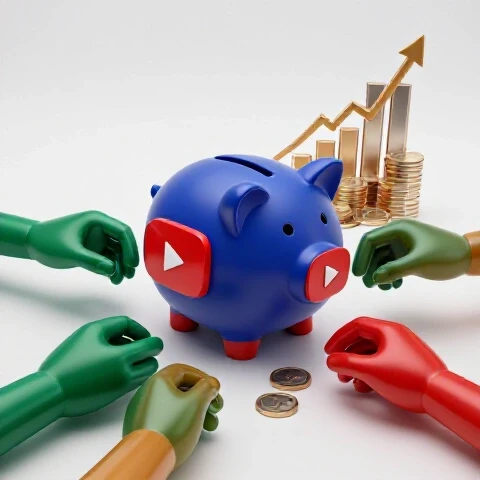
When I faced my first significant income drop, I realized I had no idea where my money was actually going. I was looking at my bank balance instead of a structured ledger. To start your recovery, you must document every penny. This means exporting your last six months of earnings and categorizing them by source.
Most creators find that they rely on one “pillar” of income, usually AdSense. If that pillar crumbles, the whole structure falls. Your goal in this audit is to find your “break-even” number. This is the minimum amount of money you need to cover your production costs and personal bills. Once you have this number, the path to recovery becomes a math problem rather than an emotional struggle.
Identifying the AdSense Cliff and Revenue Gaps
The AdSense cliff occurs when a channel experiences a sharp decline in ad earnings due to platform changes or restricted monetization. Identifying these gaps involves comparing your historical Revenue Per Mille (RPM) against your current metrics to see exactly how much income must be replaced through other sources.
I recommend using a simple spreadsheet to track your monthly RPM. In my experience, a healthy channel should aim for a diversified RPM that includes multiple streams. If your ad revenue drops from $8.00 per thousand views to $1.50, you have a $6.50 gap to fill. You can fill this gap by increasing affiliate conversions or landing a small sponsorship.
- Action Step: Create a “Revenue Gap” column in your ledger.
- Metric: Subtract your current monthly total from your average monthly total over the last year.
- Goal: Focus 100% of your marketing efforts on the stream that has the highest potential to fill that gap quickly.
Revenue-Focused Video Creation for Rebuilding Income
Revenue-focused video creation is the practice of designing content specifically to maximize earning potential while remaining within platform guidelines. This strategy involves selecting topics that attract high-paying advertisers and lend themselves naturally to affiliate products or digital offers.
After an income shift, you cannot afford to make “just for fun” videos. Every piece of content must serve a financial purpose. I have found that “educational” or “how-to” content often carries a higher RPM than general entertainment. This is because advertisers are willing to pay more to reach an audience that is actively looking to solve a problem or make a purchase.
When I rebuilt my own revenue streams, I looked at which videos had the highest “Earnings Per View” (EPV). This is a metric I use that combines ad revenue, affiliate clicks, and product sales for a single video. By focusing on high-EPV topics, I was able to make more money with fewer views. This took the pressure off the algorithm and put the control back in my hands.
Content Pivots and Compliant Monetization Strategies
A content pivot is a strategic shift in your video topics to align with more stable or higher-paying revenue models. Compliant monetization ensures that your new content stays within platform rules while maximizing your ability to earn through sponsorships and direct sales.
Interestingly, some of my most successful pivots happened when I moved away from broad topics toward “niche-down” subjects. For example, instead of a general tech review, I might focus on “The Best Budget Tools for Freelance Accountants.” This attracts a specific audience that brands are eager to sponsor.
- High-Value Topics: Focus on “Top 10” lists, “How-to” guides, and “Product Comparison” videos.
- Compliance Check: Ensure your thumbnails and titles are clear and accurately represent the content to avoid further platform flags.
- Efficiency: Use a “Master Template” for your descriptions that includes all your affiliate links and product offers to ensure no revenue is left on the table.
Data-Driven Video Marketing to Stabilize Earnings
Data-driven video marketing uses specific metrics from your analytics to guide where you promote your content and how you engage your audience. This approach ensures that your marketing efforts result in actual income rather than just “vanity metrics” like likes or comments.
Many creators make the mistake of sharing their videos everywhere without looking at the results. As a financial operator, I look at the “Conversion Rate” of my marketing efforts. If I spend two hours on X (formerly Twitter) but it only generates $5 in affiliate sales, that is a poor use of my time.
Instead, I focus on building an email list. An email list is a “traffic source” you own. If your channel’s visibility fluctuates, you can send an email to your most loyal followers and drive immediate traffic to a sponsored video or a new product. This creates a “floor” for your income that the platform cannot take away.
Using Analytics to Identify High-Conversion Traffic
High-conversion traffic refers to viewers who are most likely to take a financial action, such as buying a product or signing up for a service. Using analytics allows you to see which external sites or search terms are bringing in your most profitable audience members.
Building on this, I look at the “Traffic Sources” report in my dashboard every week. I look for “Search” traffic specifically. People who find your videos via search are often in a “buying state of mind.” If I see a specific search term is driving views to an old video, I will update the description of that video with new affiliate links or a link to my latest digital product.
- Tool: YouTube Analytics “Traffic Sources” tab.
- Action: Find your top 5 search terms and create a “follow-up” video for each.
- Benchmark: Aim for at least 20% of your total views to come from “Search” to ensure long-term stability.
Sponsorship Negotiation Guide for Rebuilding Revenue After a Policy Hit
A sponsorship negotiation guide provides a framework for creators to secure brand deals even when their platform earnings are low. It focuses on selling the value of your audience’s trust and your production quality rather than just relying on view counts.
When your AdSense is down, brand deals become your lifeline. However, many creators feel they have no leverage when their views are inconsistent. This is a myth. Brands do not just buy views; they buy access to a specific community. I have negotiated five-figure deals for channels with modest views because the audience was highly targeted.
To negotiate effectively, you need a media kit that highlights your “Audience Demographics.” Show the brand that your viewers are the exact people they want to reach. If you can prove that your audience has a high “Intent to Buy,” you can charge a premium. I always start my negotiations by asking the brand what their specific goals are—leads, sales, or brand awareness—and then I tailor my pitch to those goals.
Establishing Fair Rates and Value Propositions
A value proposition is the unique benefit you offer a brand, while a fair rate is a price that reflects your production costs and the market value of your reach. Establishing these requires looking at industry benchmarks and your own historical data.
In my experience, a standard starting point for sponsorship rates is a $20 to $30 CPM (Cost Per Mille). This means if you average 10,000 views per video, you might charge $200 to $300. However, if you provide “Usage Rights” (allowing the brand to use your video in their ads), you can often double or triple that fee.
| Channel Size (Avg Views) | AdSense (Est. Monthly) | Sponsorship (Per Video) | Affiliate/Product (Est.) |
|---|---|---|---|
| 5,000 – 10,000 | $150 – $400 | $250 – $500 | $100 – $300 |
| 10,000 – 50,000 | $400 – $1,500 | $500 – $2,500 | $300 – $1,000 |
| 50,000 – 100,000 | $1,500 – $4,000 | $2,500 – $6,000 | $1,000 – $3,000 |
- Negotiation Tip: Never accept the first offer. Always ask if there is a budget for “Whitelisting” or “Usage Rights.”
- Financial Highlight: Sponsorships should ideally make up 40% to 50% of your total revenue during a recovery phase.
Diversifying YouTube Income to Rebuild After a Policy Hit
Income diversification is the strategy of spreading your earnings across multiple platforms and products so that no single source controls your financial future. This reduces the risk of a total income loss if one stream is interrupted.
I often tell my clients that “AdSense is the icing, not the cake.” The cake should be made of more stable ingredients like digital products, affiliate marketing, and memberships. When I lost a portion of my ad revenue years ago, I survived because I had a $19 digital guide that sold five copies a day. That $95 daily “floor” kept my business running while I fixed the main channel.
Affiliate marketing is the easiest way to start diversifying. You don’t need to create a product; you just need to recommend tools you already use. Interestingly, the most successful affiliates aren’t the ones with the most views, but the ones with the most trust. If you provide a deep-dive tutorial on how to use a software, your conversion rate will be much higher than a simple shout-out.
Building a Profitable Mix of Products and Affiliates
A profitable mix involves balancing “passive” income like affiliates with “active” income like digital products or consulting. This balance ensures you have steady cash flow as well as the potential for large “paydays.”
- Affiliates: Use platforms like Amazon Associates, Impact, or ShareASale. Focus on recurring commissions (SaaS products).
- Digital Products: Create PDFs, templates, or mini-courses. These have a 90%+ profit margin.
- Memberships: Use YouTube Memberships or Patreon for “recurring” predictable income.
Monthly Expense Breakdown for a Recovering Channel:
| Expense Category | Budget (Low End) | Budget (Mid Range) | Why it Matters |
|---|---|---|---|
| Editing Software | $20 | $50 | Essential for production quality. |
| Research/Tools | $10 | $100 | Helps find high-RPM topics. |
| Outsourcing (Editing) | $0 | $500 | Frees up time for sponsorship outreach. |
| Marketing/Ads | $0 | $100 | Drives traffic to high-margin products. |
| Total | $30 | $750 | Keep this below 30% of gross income. |
Establishing a YouTube Profitability Timeline During Recovery
A profitability timeline is a realistic projection of how long it will take to return to your previous income levels and eventually exceed them. It helps manage expectations and prevents burnout during the slow process of rebuilding.
Rebuilding is not an overnight process. Based on my records and those of the creators I have coached, a full recovery usually takes 6 to 12 months. The first three months are about “stopping the bleed” by cutting costs and finding immediate alternative revenue. The next six months are about “stabilizing” through new sponsorships and affiliate growth.
By the 12-month mark, most creators who follow a structured plan find that they are actually making more money than they were before the policy hit. This is because their new income streams are more diverse and higher-margin than AdSense alone.
- Months 1-3: Focus on “survival cash.” Cut all non-essential expenses and launch an affiliate-heavy content series.
- Months 4-9: Focus on “growth.” Start reaching out to 5-10 brands per week for sponsorships.
- Months 10-24: Focus on “scale.” Launch your own digital product or membership site to “own” your revenue.
Case Study: The 12-Month Revenue Transformation
I worked with a creator in the “Lifestyle” niche who saw their AdSense drop by 70% overnight. They were devastated and ready to quit. We implemented a strict financial tracking system and shifted their content toward “Budget Travel Tips” which had a higher affiliate potential.
Before the Hit: * AdSense: $3,000/mo * Sponsorships: $500/mo * Affiliates: $100/mo * Total: $3,600
6 Months into Recovery: * AdSense: $1,200/mo (Still low) * Sponsorships: $2,000/mo (Aggressive outreach) * Affiliates: $800/mo (Niche-focused content) * Total: $4,000
12 Months into Recovery: * AdSense: $1,800/mo (Slowly recovering) * Sponsorships: $3,500/mo * Affiliates: $1,200/mo * Digital Product: $1,500/mo * Total: $8,000
This creator doubled their income by moving away from a reliance on the platform’s ad system. They used the “crisis” as a reason to finally build the business they had been putting off.
Essential Tools for Financial Tracking and Recovery
To manage this transition, you need a “tech stack” that focuses on numbers, not just creativity. Here are the tools I use to maintain my 10-year records:
- Google Sheets/Excel: For my master ledger. I track every video’s EPV (Earnings Per View) here.
- Notion: For my “Sponsorship CRM.” I track every brand I contact, the status of the deal, and the payment dates.
- QuickBooks or Wave: To track expenses and make tax season easier.
- TubeBuddy or VidIQ: Specifically for the “Keyword Research” tools to find high-CPM topics.
- ConvertKit or Mailchimp: To build and manage the email list that provides “owned” traffic.
Final Roadmap for Financial Stability
Rebuilding your income requires a disciplined, step-by-step approach. You cannot wait for the algorithm to “fix itself.” You must take control of your financial destiny by diversifying and tracking every metric.
- Step 1: Audit your last 6 months of data and find your “break-even” number.
- Step 2: Identify your “Revenue Gap” and choose one alternative stream (Affiliates or Products) to fill it.
- Step 3: Pivot your content to high-EPV topics that attract premium sponsors.
- Step 4: Build an “Owned Traffic” source like an email list to stabilize views.
- Step 5: Negotiate brand deals based on audience value, not just view counts.
By following this framework, you aren’t just rebuilding a channel; you are building a resilient business that can weather any platform shift.
FAQ: Frequently Asked Questions on Rebuilding Revenue
How long does it take to see a significant change in income after a pivot? Typically, you will see the first signs of stabilization within 30 to 60 days. For example, if you add targeted affiliate links to your top 10 videos, you can see a revenue bump in your next payout. However, a full recovery to previous income levels usually takes 6 to 12 months of consistent, data-driven content creation.
What is a “good” percentage of income to come from AdSense? For a stable business, AdSense should ideally account for no more than 30% to 40% of your total revenue. If your total monthly income is $5,000, aiming for $1,500 from AdSense, $2,000 from sponsorships, and $1,500 from affiliates/products provides a much safer financial cushion.
Can I still get sponsorships if my views are currently down? Yes. Brands often value engagement and audience trust over raw view counts. If you can show a brand that your 5,000 viewers are highly engaged and fit their target customer profile, you can still secure deals. Focus your pitch on “conversion potential” rather than “reach.”
What are the most common hidden costs in video production? The biggest hidden costs are often “time” and “software subscriptions.” If you spend 20 hours editing a video that earns $50, your hourly rate is only $2.50. Other costs include music licensing, stock footage, and hardware depreciation. Tracking these in a ledger helps you see if a video type is actually profitable.
How do I find high-RPM keywords for my niche? Use tools like the Google Keyword Planner or YouTube’s own “Research” tab in Analytics. Look for keywords with “High Competition” among advertisers. For example, “How to invest in stocks” will always have a higher RPM than “Funny cat videos” because the advertisers (banks and brokers) are willing to pay more for those viewers.
Is it worth starting a Patreon or membership site during a recovery? Absolutely. Memberships provide “recurring revenue,” which is the holy grail of financial stability. Even if only 1% of your audience joins at $5/month, that provides a predictable base of income that helps you pay your fixed costs like software and internet.
How do I calculate my “Earnings Per View” (EPV)? Take the total revenue generated by a specific video (AdSense + Affiliates + Sponsorship portion) and divide it by the total views. For example, if a video has 10,000 views and made $100 in ads and $200 in affiliates, your EPV is $0.03. Your goal is to increase this number over time.
Should I delete old videos that might be causing policy issues? Instead of deleting, consider “Unlisting” them. Deleting videos can hurt your channel’s overall watch time and authority. Unlisting them removes them from public view while keeping the data in your analytics for your own financial review.
What is the best way to track affiliate income across multiple platforms? I recommend a “Monthly Affiliate Master Sheet.” Once a month, log into every platform (Amazon, Impact, etc.) and record the “Clicks,” “Conversions,” and “Commissions.” This allows you to see which products are actually resonating with your audience.
How much should I set aside for taxes as a creator? A safe rule of thumb is to set aside 25% to 30% of your net profit (income minus expenses). Keeping a clear ledger of your production costs is vital here, as those expenses reduce your taxable income, saving you money in the long run.
(This article was written by one of our staff writers, Nathan Brooks. Visit our Meet the Team page to learn more about the author and their expertise.)