YouTube Content Funnel Strategy: What Converts Viewers (Guide)
The hollow feeling of watching a video you spent twenty hours on stall at fifty views is something I know intimately. It is a quiet, heavy frustration that makes you question why you started this journey in the first place. You see other creators seemingly glide toward success while you feel like you are running in place, stuck between chasing the latest trend and making the deep, meaningful content you actually care about. This fatigue is not a sign of failure but a signal that your organic viewer journey lacks a clear structure to turn casual browsers into dedicated followers.
Understanding the Organic Viewer Journey for Sustainable Growth
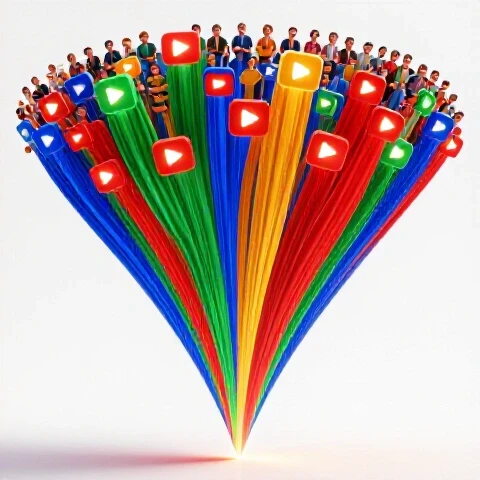
An organic viewer journey is the sequence of steps a person takes from seeing your thumbnail to clicking “subscribe” and watching your next three videos. It is a roadmap that guides a stranger through your content library in a way that builds trust and authority.
When I managed my education-focused channel, I realized that my videos were disconnected islands. People would watch one tutorial, get their answer, and leave. I had no bridge to keep them around. By building a high-retention video sequence, I moved from a “one-and-done” view model to a “binge-watch” model. This shift is the foundation of data-driven video marketing. It ensures that every new viewer has a clear path to becoming a long-term fan.
- Discovery Layer: High-interest topics that attract new eyes through search or suggestions.
- Trust Layer: Educational or deep-dive content that proves your expertise.
- Action Layer: Content that encourages a specific response, like a channel subscription or joining a newsletter.
Niche Selection and Validating Your Direction
Niche selection is the process of identifying a specific problem or interest area where your unique perspective meets a clear market demand. It is the most critical decision in strategic video creation because it dictates your ceiling for growth and your daily workload.
In my nine years of consulting, I have seen creators pick niches that are either too broad, leading to a diluted audience, or too narrow, leading to rapid burnout. To find a sustainable direction, you must look at the intersection of search volume and your own ability to produce content consistently. Use tools like Google Trends to see if interest in your topic is rising or falling over a five-year period.
Niche Selection Decision Matrix
| Criteria | High-Growth Niche | Low-Growth Niche |
|---|---|---|
| Search Intent | Users seek specific solutions daily | Users only search during rare events |
| Content Longevity | Topics remain relevant for 12+ months | Topics expire within 48 hours |
| Audience Overlap | High interest in related sub-topics | Topic is a “dead end” with no related interests |
| Competition | Healthy mix of large and small creators | Dominated by one giant or completely empty |
Key Takeaway: A winning niche is not just something you like; it is a space where search data confirms a recurring need for information.
Building Content Pillars for Sustainable Growth
Content pillars are three to four core themes that provide the framework for every video you produce. They act as boundaries that prevent you from drifting into unrelated topics that confuse your audience and the YouTube recommendation system.
When I started consulting for mid-sized creators, the biggest issue was always “content drift.” A creator would make a video about productivity, then one about travel, then one about tech. This lack of a YouTube content strategy makes it impossible for the platform to know who to suggest your videos to. By defining pillars, you create a predictable experience for your viewers.
- Educational Pillars: Videos that answer “How do I?” questions. These drive evergreen traffic.
- Community Pillars: Videos that share personal stories or opinions. These build loyalty.
- Trend Pillars: Videos that react to industry news. These provide short-term growth spikes.
Optimizing the Discovery Layer: Thumbnails and Titles
The discovery layer is the first point of contact between your video and a potential viewer. It consists of your title and thumbnail, which must work together to create a “curiosity gap” that only your video can fill.
Data-driven video marketing relies heavily on Click-Through Rate (CTR). If your CTR is below 4%, your discovery layer is likely failing. I found that the most successful titles for intermediate creators focus on a specific transformation or a hidden truth. Instead of “How to Save Money,” a better title would be “The 3 Expenses I Cut to Save $10k.” This creates a specific expectation and promises a clear result.
- Visual Contrast: Use colors that stand out against the white or dark mode background of the platform.
- Faces and Emotion: Human faces with clear expressions often increase trust and clicks.
- Text Minimalist: Limit thumbnail text to three words or less to ensure readability on mobile devices.
Retention Tactics that Convert Viewers into Fans
Retention is the ability to keep a viewer watching your video from the first second to the last. High-retention video sequences are designed with “re-engagement triggers” every 60 to 90 seconds to prevent the viewer from clicking away.
In my own channel experiments, I noticed a massive drop-off at the 30-second mark. This was because my introductions were too long. I was spending too much time explaining who I was instead of delivering the value promised in the title. By moving directly into the content and using “The Bridge” technique, I increased my average view duration by 25%. The Bridge is a short sentence that connects the hook to the first major point of the video.
Retention Benchmarks by Format
| Video Format | Target 30-Second Retention | Target Total Retention |
|---|---|---|
| Tutorial / How-to | 70% | 45% |
| Story-Driven Vlog | 60% | 35% |
| News / Commentary | 65% | 40% |
| Deep-Dive Analysis | 75% | 50% |
Key Takeaway: Watch your retention graphs in analytics. Every “dip” is a lesson in what your audience finds boring or confusing.
The Strategic Pivot: Changing Direction Without Losing Your Audience
A channel pivot is a deliberate shift in content strategy to align with new goals or market shifts. It is a high-risk move that requires careful planning to ensure you do not alienate the subscribers you have already worked so hard to gain.
I once consulted for a creator who wanted to pivot from gaming to personal finance. We did not do it overnight. Instead, we used a “bridge content” strategy. We created videos about the economics of the gaming industry first. This allowed the existing audience to transition slowly. If you pivot too fast, your “return viewer” count will plummet, which tells the platform your content is no longer valuable.
- Audit Your Overlap: Find the common interest between your old niche and your new one.
- Communicate the “Why”: Tell your audience why the change is happening to build transparency.
- Monitor Subscriber Retention: Expect some loss, but aim to keep at least 70% of your active viewers.
Sustainable Upload Cadence: Balancing Life and Growth
A sustainable upload cadence is a publishing schedule that you can maintain for years without experiencing burnout. It is better to upload one high-quality video every two weeks than to upload three mediocre videos a week and quit after two months.
Decision fatigue often stems from trying to do too much. For creators aged 25 to 45 who have careers and families, a weekly or bi-weekly schedule is often the “sweet spot.” My tracking data shows that for intermediate creators, quality and search optimization have a much higher impact on long-term growth than sheer frequency.
- Batch Processing: Research on Monday, script on Tuesday, film on Wednesday.
- Template Your Workflow: Use the same description formats and thumbnail layouts to save time.
- The “Buffer” System: Always have two videos finished and scheduled ahead of time to account for life’s surprises.
Tracking Success: Metrics for Long-Term Optimization
Long-term optimization involves looking past simple view counts and focusing on the metrics that indicate true channel health. This includes “Returning Viewers” and “Watch Time per Impression.”
When I look at a channel’s data, I look for the “Evergreen Multiplier.” This is the ratio of views coming from search versus views coming from the initial upload push. A healthy channel should see its older videos continue to gain views months or even years later. This is the hallmark of a successful YouTube content strategy. It means your work is an asset that grows in value over time.
- Impression Click-Through Rate (CTR): Measures how effective your discovery layer is.
- Average View Duration (AVD): Measures the quality of your retention tactics.
- Subscriber Growth Rate: Measures how well your content converts casual viewers into fans.
Strategic Roadmap for Your Content Journey
Building a channel that converts requires a move from “guessing” to “knowing.” Start by auditing your current videos to see where people are leaving. Define your three content pillars and stick to them for at least ten videos. Focus your energy on the first 30 seconds of your videos to master retention.
Remember that growth is rarely a straight line. There will be weeks when the numbers dip, but if you have a structured organic viewer journey in place, those dips are just data points, not disasters. Stay focused on the value you provide to your specific niche, and the results will follow.
Frequently Asked Questions
How do I know if I should pivot my channel or just keep going?
Look at your “Returning Viewers” metric in YouTube Analytics. If that number has been steadily declining for three months despite consistent uploads, your current niche may be saturated or losing relevance. A pivot is necessary when the data shows your audience is no longer engaging with your core pillars, but ensure you find a “bridge topic” to keep your existing fans.
Is evergreen content better than trending content for a small channel?
A healthy YouTube content strategy requires a balance. Evergreen content provides a “floor” of consistent daily views, while trending content provides a “ceiling” for rapid growth. Aim for a 70/30 split: 70% evergreen to build a long-term asset and 30% trending to capitalize on current search spikes.
What is a realistic upload cadence for someone with a full-time job?
For most creators, a bi-weekly cadence (one video every two weeks) is the most sustainable. This allows enough time for deep research and high-quality editing without causing burnout. Consistency is more important than frequency; the platform rewards a predictable schedule that keeps viewers coming back.
Why is my CTR high but my watch time low?
This usually indicates a “clickbait” problem. Your thumbnail and title are promising something that the video is not delivering, or your introduction is too slow. To fix this, ensure your video’s first ten seconds directly address the promise made in the thumbnail and move into the value immediately.
How do I find the right keywords for strategic video creation?
Use a combination of YouTube Search Suggest (typing your topic into the search bar to see what auto-fills) and tools like Google Trends. Look for “Rising” queries, which indicate topics that are gaining popularity but may not have much competition yet. This allows you to get ahead of a trend before it becomes crowded.
Can I have more than one niche on one channel?
It is generally discouraged for intermediate creators. The YouTube recommendation system works best when it can easily categorize your channel. If you have two vastly different niches, you split your audience, which lowers your “Click-Through Rate” among subscribers and hurts your overall reach. It is better to have one clear niche with three related content pillars.
How long does it take to see results from a new content strategy?
In my experience tracking mid-sized channels, it takes about 8 to 12 weeks of consistent posting under a new strategy to see a shift in the data. The platform needs time to test your videos with different audience segments and gather enough retention data to understand who your ideal viewer is.
What is the most important metric for channel growth?
While views are the most visible, “Returning Viewers” is the most important metric for long-term sustainability. It proves that your organic viewer journey is working and that people find enough value in your content to come back for more. A high number of returning viewers is the strongest signal to the platform to promote your videos to new people.
How do I reduce decision fatigue when planning videos?
Create a “Content Decision Matrix.” Rate every video idea on a scale of 1 to 10 based on three factors: Ease of Production, Search Interest, and Personal Passion. Only move forward with ideas that score high in at least two of those categories. This removes the emotional weight of choosing what to film next.
Should I delete old videos that don’t fit my new direction?
No, unless they are a legal or brand risk. Old videos can still drive traffic and provide “Watch Time” that helps your channel’s overall standing. Instead of deleting them, use “End Screens” and “Cards” on those old videos to point viewers toward your new, improved content sequence.
(This article was written by one of our staff writers, Nicholas Falk. Visit our Meet the Team page to learn more about the author and their expertise.)